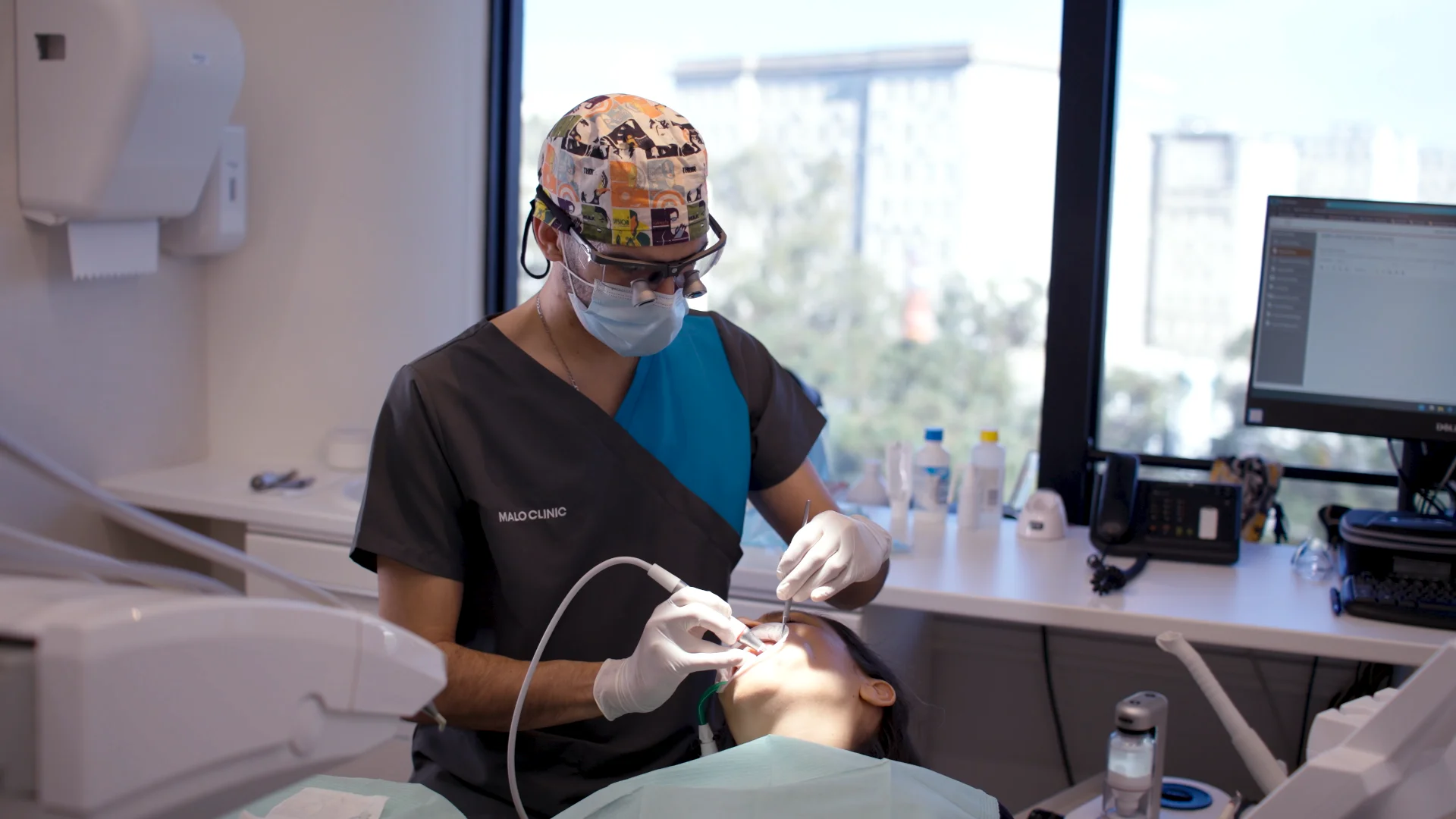
Jaw pain or orofacial pain

Pain or discomfort located in the orofacial and/or craniocervical area.

What is jaw pain or orofacial pain?

Jaw pain, or temporomandibular/orofacial pain, is a common ailment that can affect the oral cavity, face, joints, masticatory muscles, or the craniocervical area. Diagnosis begins with identifying the source of the pain, with temporomandibular joint disorders being the most common cause.

Other conditions can also be associated with these symptoms, such as sinusitis, infections, neurological disorders, or changes in the cervical spine. Due to the variety of symptoms, making a correct diagnosis is crucial for effective treatment and pain relief.

What is jaw pain or orofacial pain?

Main causes

The development of orofacial pain may be associated with a combination of several factors, including:

Tooth or gum infections

Temporomandibular joint (TMJ) disorders

Bruxism (teeth grinding)

Decreased saliva production (dry mouth)

Rheumatic diseases

Possible symptoms

Symptoms associated with orofacial pain can vary depending on its origin and cause. The most common symptoms include:

1

1

Jaw tenderness or pain

Discomfort or pain during chewing, speaking, swallowing, or opening the mouth. There may also be episodes of pain at rest, without stimulation or loading of the temporomandibular joint (TMJ).

2

2

Difficulty opening or closing the mouth

A feeling that the jaw is locked or stiff, making it difficult to perform normal mouth movements.

3

3

Headache

Various types of headaches (cephalea) that may be associated with temporomandibular joint dysfunction, migraines, etc.

4

4

Earache or tinnitus

Discomfort in the ear area or a ringing/buzzing sensation in the ears, often related to temporomandibular joint dysfunction.

5

5

Clicks or crackles during jaw movements

Clicking, popping, or grating sounds when opening or closing the mouth, indicating possible temporomandibular joint dysfunction.

6

6

Facial swelling

Swelling (edema) in the mandible/maxilla area or around the temporomandibular joint.

7

7

Tooth wear

Excessive, pathological tooth wear, which may (but does not have to) be accompanied by toothache, pain in the area of the temporomandibular joint, and masseter muscles.

Marcar Consulta de Avaliação

If symptoms persist or worsen, dental consultation and evaluation is important. Even in the absence of severe pain, regular check-ups are essential to prevent complications.

Available treatment methods

Available treatment methods

Treatment of temporomandibular/orofacial pain always depends on its cause and the severity of symptoms. For this reason, a correct diagnosis is crucial. Here are some commonly recommended therapeutic options:

Dental intervention

Where the-orofacial pain has a dental origin, the underlying disease may be dental caries (with or without pulp involvement), periodontal disease (periodontitis), loss of tooth structure and consequently tooth sensitivity caused by wear, trauma,

Where the-orofacial pain has a dental origin, the underlying disease may be dental caries (with or without pulp involvement), periodontal disease (periodontitis), loss of tooth structure and consequently tooth sensitivity caused by wear, trauma,

Dental intervention

Where the-orofacial pain has a dental origin, the underlying disease may be dental caries (with or without pulp involvement), periodontal disease (periodontitis), loss of tooth structure and consequently tooth sensitivity caused by wear, trauma,

Use of intraoral appliances and splints

If the temporomandibular pain results from temporomandibular joint dysfunction, myorelaxant (relaxation) splints can be used to reduce pathological tooth wear, promote muscle relaxation and reduce intra-articular tension/pressure.

If the temporomandibular pain results from temporomandibular joint dysfunction, myorelaxant (relaxation) splints can be used to reduce pathological tooth wear, promote muscle relaxation and reduce intra-articular tension/pressure.

Use of intraoral appliances and splints

Pharmacological treatment (Pharmacotherapy)

To relieve pain and/or reduce inflammation, painkillers and NSAIDs (non-steroidal anti-inflammatory drugs) may be the first-line treatment. Depending on the diagnosis, muscle relaxants (myorelaxants), anti-anxiety medications (anxiolytics), antidepressants, and other medicinal products acting on the central nervous system may also be used.

To relieve pain and/or reduce inflammation, painkillers and NSAIDs (non-steroidal anti-inflammatory drugs) may be the first-line treatment. Depending on the diagnosis, muscle relaxants (myorelaxants), anti-anxiety medications (anxiolytics), antidepressants, and other medicinal products acting on the central nervous system may also be used.

Pharmacological treatment (Pharmacotherapy)

Surgical treatment (Surgery)

In severe cases of temporomandibular joint (TMJ) dysfunction, where conservative treatment does not yield results, surgical options can be considered, ranging from minimally invasive procedures to more complex surgical interventions.

In severe cases of temporomandibular joint (TMJ) dysfunction, where conservative treatment does not yield results, surgical options can be considered, ranging from minimally invasive procedures to more complex surgical interventions.

Surgical treatment (Surgery)

Behavioral therapy

Stress management techniques, such as biofeedback or cognitive behavioural therapy, can be helpful for patients whose orofacial pain is linked to stress or anxiety. Learning to manage stress can reduce muscle tension, and consequently pain in the jaw and face.

Stress management techniques, such as biofeedback or cognitive behavioural therapy, can be helpful for patients whose orofacial pain is linked to stress or anxiety. Learning to manage stress can reduce muscle tension, and consequently pain in the jaw and face.

Behavioral therapy

Complementary therapies

Physiotherapy should be considered in the treatment and management of pain in a significant number of cases. Whenever muscle and joint structures are involved – both at the level of the temporomandibular joint and the cervical spine – physiotherapy proves to be an important tool in the treatment and improvement of the patient's clinical condition.

Physiotherapy should be considered in the treatment and management of pain in a significant number of cases. Whenever muscle and joint structures are involved – both at the level of the temporomandibular joint and the cervical spine – physiotherapy proves to be an important tool in the treatment and improvement of the patient's clinical condition.

Complementary therapies

Frequently asked questions

1

What causes orofacial pain?

Orofacial pain can be caused by dental and gum diseases and infections, temporomandibular joint (TMJ) disorders, bruxism, rheumatic diseases, injuries, viral infections, central nervous system disorders and other factors. A correct diagnosis is crucial for the effective treatment of the underlying cause.

2

How can I relieve jaw pain at home?

If the underlying cause of the pain is temporomandibular joint dysfunction, applying warm or cold compresses to the affected area, avoiding hard foods, performing relaxation exercises, and taking over-the-counter painkillers can be helpful in temporarily relieving the discomfort. Nevertheless, it is important to seek professional help in order to implement appropriate treatment.

3

When should I see a dentist about jaw pain?

If the pain is persistent, severe, or accompanied by other symptoms such as difficulty opening the mouth, ear pain, or clicking in the temporomandibular joint, you should immediately consult a dentist specialising in the treatment of orofacial pain.

4

Can bruxism cause jaw pain?

Yes, bruxism – i.e. habitual grinding or clenching of teeth – can lead to severe tension in the masseter muscles and pain in the temporomandibular joint. The use of intraoral appliances and splints, such as myorelaxant (relaxing) splints, helps prevent the effects of bruxism and alleviate pain.

5

Can jaw pain be related to stress?

Yes, stress can lead to increased muscle tension and trigger or worsen bruxism, both of which are directly linked to pain in the jaw and mandible. Stress management techniques can be extremely helpful in alleviating these symptoms.

6

What are the treatment methods for temporomandibular joint (TMJ) dysfunction?

Treatment methods include pharmacotherapy, physiotherapy, the use of intraoral appliances and splints, behavioural therapies, and, in severe cases, surgical treatment. The choice of appropriate therapy depends on the severity of the condition and the symptoms experienced by the patient.

7

Can children experience jaw pain?

Yes, pain in these areas can also occur in children due to dental problems, injuries or habits such as bruxism. It is important to monitor the symptoms and, if necessary, consult a specialist.

8

What can I do to prevent orofacial pain?

Maintaining proper oral hygiene, avoiding habits such as frequent gum chewing, managing stress and using intraoral splints recommended by a dentist (to prevent bruxism) can help prevent pain in the maxilla, mandible and facial area. Regular check-ups with the dentist are also essential to detect and treat any potential problems early.

Book a consultation

Book a consultation

Fill in the form and we will contact you.

I consent to the processing of my data by MALO CLINIC for marketing purposes (campaigns, benefits, offers,...) via electronic mail (Email) and SMS messages.

Thank you, the form has been submitted

Book a consultation

Book a consultation

Fill in the form and we will contact you.

I consent to the processing of my data by MALO CLINIC for marketing purposes (campaigns, benefits, offers,...) via electronic mail (Email) and SMS messages.

Thank you, the form has been submitted

Book a consultation

Book a consultation

Fill in the form and we will contact you.

I consent to the processing of my data by MALO CLINIC for marketing purposes (campaigns, benefits, offers,...) via electronic mail (Email) and SMS messages.

Thank you, the form has been submitted

Malo Clinic Polska sp. z o.o. registered in the District Court for the Capital City of Warsaw, 13th Commercial Division of the National Court Register under KRS number: 0000242331, share capital PLN 300,000.00, NIP (Tax Identification Number) 525-234-17-37, REGON (National Business Registry Number) 140078686

SWIFT: BIGBPLPW | Bank Millennium SA | ul. S. Żaryna 2A, 02-593 Warszawa | Poland

MALO CLINIC WARSZAWA Bank account: PL 06 1160 2202 0000 0000 6313 6153

MALO CLINIC SZCZECIN Bank account: PL 36 1160 2202 0000 0007 2348 1155

Developed by