+48 22 393 63 33
+48 22 393 63 33
+48 22 393 63 33

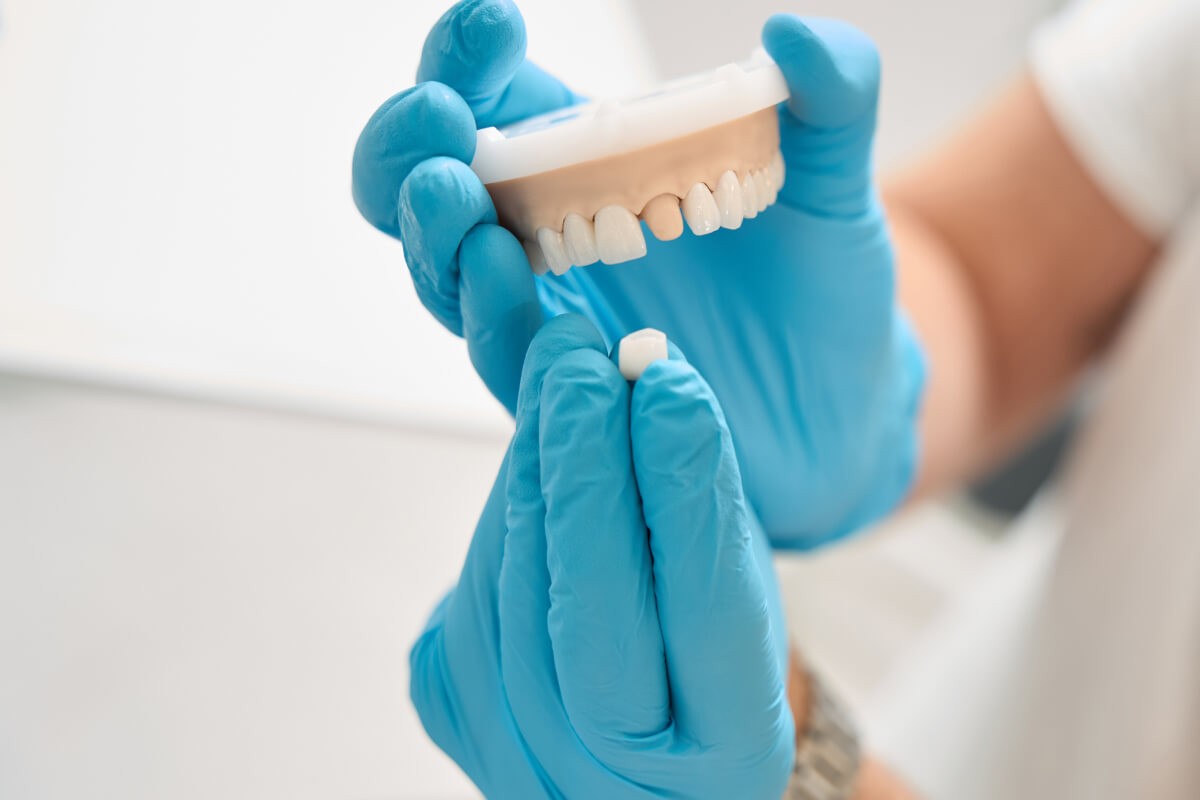

Dental Crowns
Individually tailored ceramic or metal-ceramic dental crowns – a solution that restores the shape, function, and aesthetics of your tooth, allowing you to maintain a healthy and natural smile.
Book a consultation appointment
Over 250,000 cured smiles
Over 250,000 cured smiles
Over 250,000 cured smiles
Over 250,000 cured smiles
Dedicated medical team
Dedicated medical team
Dedicated medical team
Dedicated medical team
+9 dental specialisations
+9 dental specialisations
+9 dental specialisations
+9 dental specialisations
Conveniences in payments, contracts and partnerships
Conveniences in payments, contracts and partnerships
Conveniences in payments, contracts and partnerships
Conveniences in payments, contracts and partnerships
Why do so many patients choose dental crowns?
Dental crowns are prosthetic restorations that completely cover a damaged or weakened tooth.
Dental crowns are indicated in the case of:
Severely damaged teeth with extensive decay or fractures
Restoration of missing teeth on single implants
Root canal treatment – as a way to protect and restore the shape and function of the tooth
Our medical team is here to help you!
Our medical team is here to help you!
Real results. Metamorphoses that change lives.
Real cases of patients who decided to have dental crowns at MALO CLINIC.
The publication of these cases has been explicitly authorised by the patients, who have unreservedly consented to their public presentation, recognising the information materials presented as objectively true and capable of contributing to the free and informed choice of other patients.
The publication of these cases has been explicitly authorised by the patients, who have unreservedly consented to their public presentation, recognising the information materials presented as objectively true and capable of contributing to the free and informed choice of other patients.
What are dental crowns?
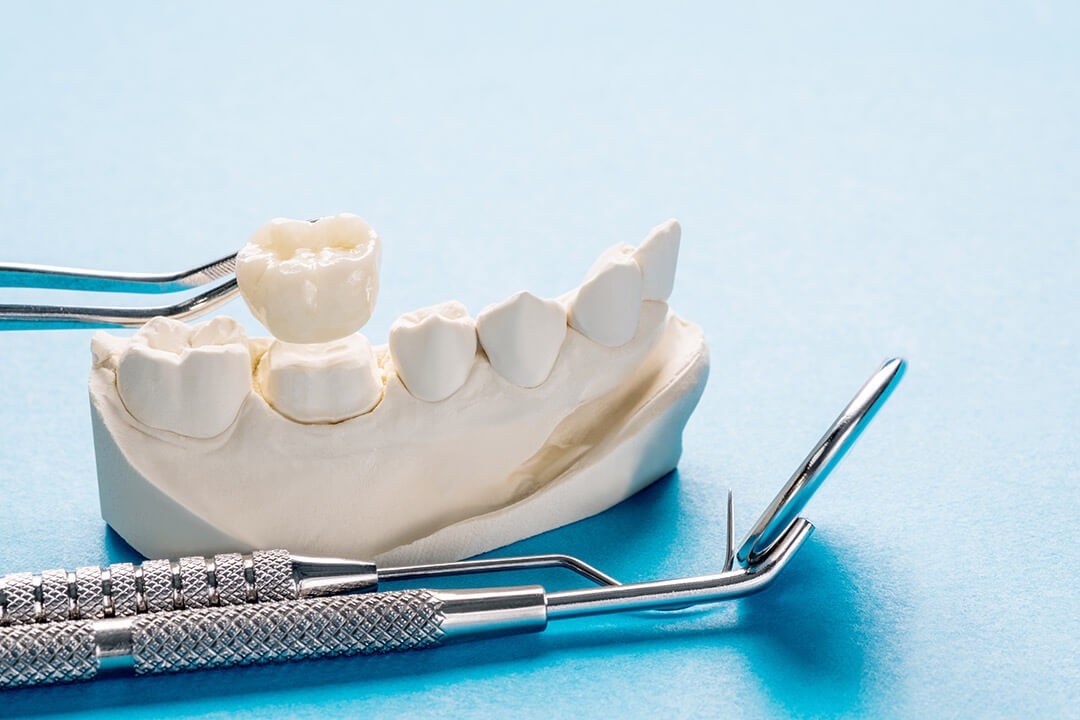
Dental crowns are highly personalised prosthetic restorations designed to restore the shape, function and aesthetics of a tooth, ensuring a healthy and natural smile.
Dental crowns can be cemented onto a damaged or weakened tooth, restoring its form and function. In the case of missing teeth, they can also be screwed onto an implant, recreating the exact same characteristics (function and aesthetics) of the lost natural teeth.
This type of dental prosthesis provides an effective and long-lasting solution for restoring damaged or missing teeth, as well as improving the aesthetics of your smile.

Our medical team is here to help you!
Stages of dental crown treatment
Starting from the first check-up visit, the treatment process follows a strictly defined path, planned to ensure safety, predictability, and comfort at every stage.
1
Comprehensive clinical assessment
During the first visit, all information necessary to make a diagnosis is collected, including examinations and digital radiological images, which allows for a reliable case analysis.
1
Comprehensive clinical assessment
During the first visit, all information necessary to make a diagnosis is collected, including examinations and digital radiological images, which allows for a reliable case analysis.
2

Planning
Based on your individual needs and expected results, a personalised treatment plan is created.
2
Planning
Based on your individual needs and expected results, a personalised treatment plan is created.
3

Preparation and taking the impression
The tooth is properly prepared (trimmed) for the dental crown, which ensures its correct shape and durability. Next, impressions of the tooth are taken, which will serve as the basis for making the crown.
3
Preparation and taking the impression
The tooth is properly prepared (trimmed) for the dental crown, which ensures its correct shape and durability. Next, impressions of the tooth are taken, which will serve as the basis for making the crown.
4
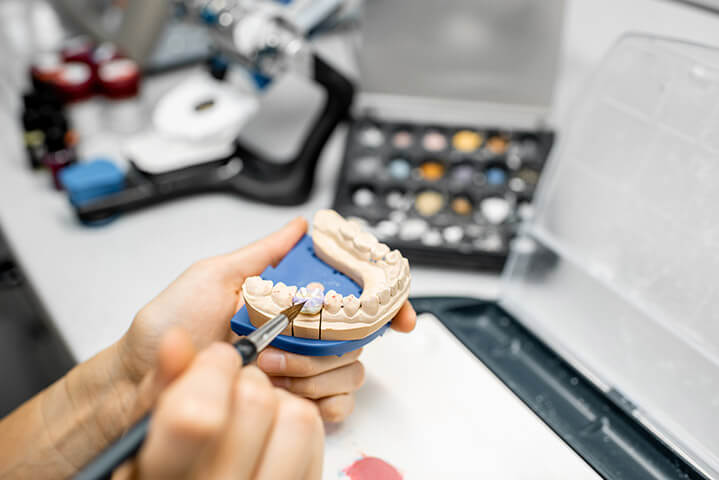
Making a dental crown
The crown is prepared in our in-house dental laboratory from the material most suitable for the specific clinical case, ensuring the highest aesthetics and functionality.
4
Making a dental crown
The crown is prepared in our in-house dental laboratory from the material most suitable for the specific clinical case, ensuring the highest aesthetics and functionality.
5
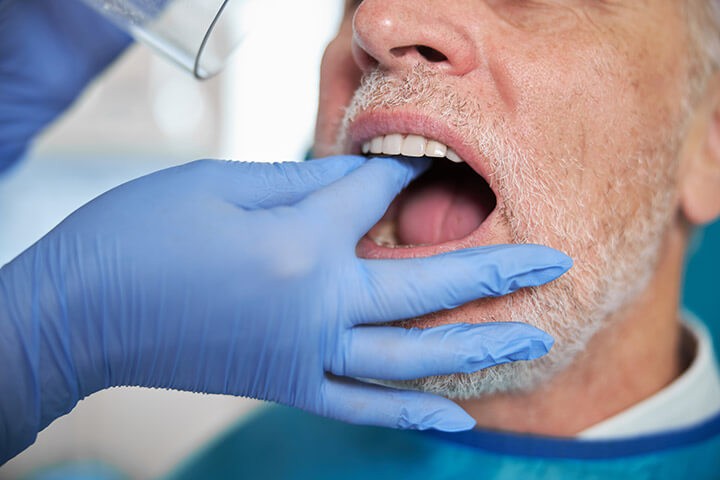
Fitting and final cementation
After production is complete, the crown is fitted and cemented onto the tooth, restoring its full function and natural appearance.
5
Fitting and final cementation
After production is complete, the crown is fitted and cemented onto the tooth, restoring its full function and natural appearance.
Find out if dental crown treatment is right for you.
Our medical team is here to help you!
Find out if dental crown treatment is right for you.
Our medical team is here to help you!
Main advantages of dental crowns
Restoration of chewing function
When a tooth is damaged by extensive decay or fractures, chewing function can be impaired. Dental crowns rebuild the tooth, restoring chewing function and allowing for a varied and healthy diet.
When a tooth is damaged by extensive decay or fractures, chewing function can be impaired. Dental crowns rebuild the tooth, restoring chewing function and allowing for a varied and healthy diet.
Protection of the damaged tooth
Dental crowns not only restore chewing function, but also protect damaged teeth. By surrounding the tooth, they act as a barrier against bacteria, preventing decay and other complications.
Dental crowns not only restore chewing function, but also protect damaged teeth. By surrounding the tooth, they act as a barrier against bacteria, preventing decay and other complications.
Durability and strength
Dental crowns are manufactured from durable and resilient materials, such as ceramics or metal-ceramics, which guarantees a long-term solution. With proper care, crowns withstand the daily forces exerted during chewing.
Dental crowns are manufactured from durable and resilient materials, such as ceramics or metal-ceramics, which guarantees a long-term solution. With proper care, crowns withstand the daily forces exerted during chewing.
Improved Aesthetics and Confidence
Dental crowns restore function and improve the aesthetics of your smile. They are personalised to harmonise with your existing teeth, which guarantees a natural result, boosts self-confidence and improves quality of life.
Dental crowns restore function and improve the aesthetics of your smile. They are personalised to harmonise with your existing teeth, which guarantees a natural result, boosts self-confidence and improves quality of life.
Frequently asked questions
1
What does the process of getting a dental crown look like?
The process of placing a dental crown consists of several stages, including tooth preparation, taking an impression, fabricating the crown, and its final placement. Depending on the clinical situation, the dentist prepares (shapes) the tooth so that the crown can be fitted. Next, impressions are taken in a traditional (analogue) or digital way, which will serve as the basis for manufacturing the crown. The crown is made of the material most suitable for the given situation, and upon its completion, it is cemented onto the tooth.
2
Are dental crowns permanent or temporary?
Dental crowns are permanent restorations designed to last for many years with proper care. However, in the vast majority of cases, it is necessary to make a temporary crown from a less durable material during the fabrication of the final crown or, in the case of implant-supported crowns, during the implant healing period.
3
What precautions and care should be taken after having a dental crown fitted?
Care after getting a dental crown involves maintaining effective oral hygiene by brushing your teeth at least twice a day and flossing daily. It is recommended to avoid certain foods, especially hard or sticky ones, to prevent damaging the crown.
4
How long do dental crowns last?
With proper care, dental crowns can last for 10 to 15 years or longer. Their lifespan depends on the material used, oral hygiene, and the patient's habits. Regular dental visits help to monitor the condition of the crown over time.
5
Do dental crowns look natural?
Yes. Dental crowns are custom-made and personalised in terms of colour, shape and size to blend in perfectly with your existing teeth. In particular, ceramic crowns are virtually indistinguishable from natural teeth, providing an excellent aesthetic result.
MALO CLINIC
Malo Clinic Polska sp. z o.o. registered in the District Court for the Capital City of Warsaw, 13th Commercial Division of the National Court Register under KRS number: 0000242331, share capital PLN 300,000.00, NIP (Tax Identification Number) 525-234-17-37, REGON (National Business Registry Number) 140078686
SWIFT: BIGBPLPW | Bank Millennium SA | ul. S. Żaryna 2A, 02-593 Warszawa | Poland
MALO CLINIC WARSZAWA Bank account: PL 06 1160 2202 0000 0000 6313 6153
MALO CLINIC SZCZECIN Bank account: PL 36 1160 2202 0000 0007 2348 1155
@ 2026 ALL RIGHTS RESERVED - MALO CLINIC SA
Developed by