Dental implantology
Dental implantology

Dental implantology

Implantology is a field of dentistry concerned with replacing missing teeth using implants. These procedures restore full functionality of the masticatory system, user comfort, and the correct aesthetics of the teeth.

About the specialisation: Dental implantology in Warsaw

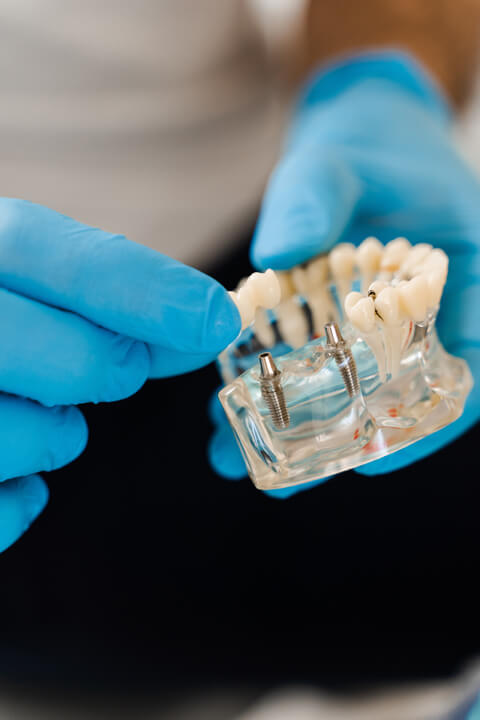
Implantology is the field of dentistry responsible for restoring missing teeth using dental implants. Implants function as artificial roots, placed in the jawbone or mandible, which provide a stable base for crowns, bridges or fixed dentures.

Tooth loss adversely affects chewing, proper speech and overall oral health. Implantology allows for the safe and permanent restoration of these functions, taking into account the patient's anatomical conditions.
About the specialisation: Dental implantology in Warsaw

Implant solutions at Malo Clinic in Warsaw

Each clinical situation is different, which is why dental implantology offers solutions tailored to the number of missing teeth and the patient's anatomical conditions.

Missing single tooth

Single tooth restoration

In the case of a single missing tooth, the most recommended solution is a single implant. This implant serves as the foundation for a fixed crown, custom-designed to perfectly replicate the shape, colour and function of a natural tooth.

In the case of a single missing tooth, the standard solution is a one-stage or two-stage implant that replaces the tooth root. It provides a stable base for a prosthetic crown, matched in shape and colour to the patient's natural teeth.

Benefits of Implantology for Oral Health

1

1

Durable and stable restoration of missing teeth

Dental implants offer a long-term solution to the problem of tooth loss, featuring significantly greater durability compared to other prosthetic restoration options, such as removable dentures.

2

2

Excellent aesthetics and natural appearance

Implant-supported dentures are designed to perfectly replicate natural teeth, which allows for an excellent aesthetic effect, significantly improving the patient's appearance and self-confidence.

3

3

Speech improvement and natural diction

Removable dentures can negatively affect correct pronunciation, causing lisping or shifting of the restoration. Dental implants provide stable and secure retention of prosthetic restorations, which eliminates the problem of dentures falling out and allows for fully clear, natural diction.

4

4

Preservation of bone tissue and protection against its loss

Dental implants help prevent resorption (loss) of the jaw and mandibular bone, which is a common problem after tooth loss. Natural bone stimulation through physiological chewing loads allows for the maintenance of normal bone density and volume.

5

5

Improvement of chewing function and effective biting

Implants function exactly like natural teeth, enabling effective and comfortable chewing of even hard foods. Restoring the full functionality of the masticatory system is crucial for the proper breakdown of food, which directly affects digestion processes and the proper nutrition of the body.

6

6

Exceptional comfort and stability of the restoration

Unlike removable dentures, fixed implant-supported restorations are permanently secured in the mouth. This guarantees complete stability, which completely eliminates issues with restoration movement, the need for denture adhesives, and feelings of discomfort.

Our clinical team is here to help you.

Are you missing a few or all of your teeth?

Book an implant consultation and find out if a permanent prosthetic restoration on implants is the right solution for you.
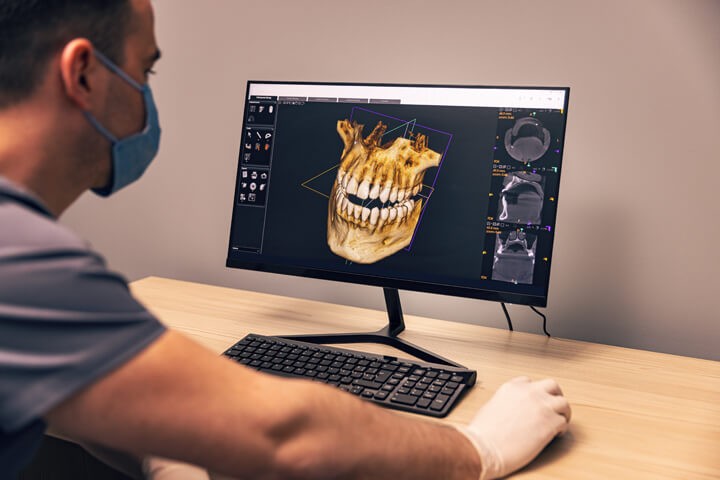
  • Digital planning systems

    Digital planning systems

  • Digital planning systems

    Digital planning systems

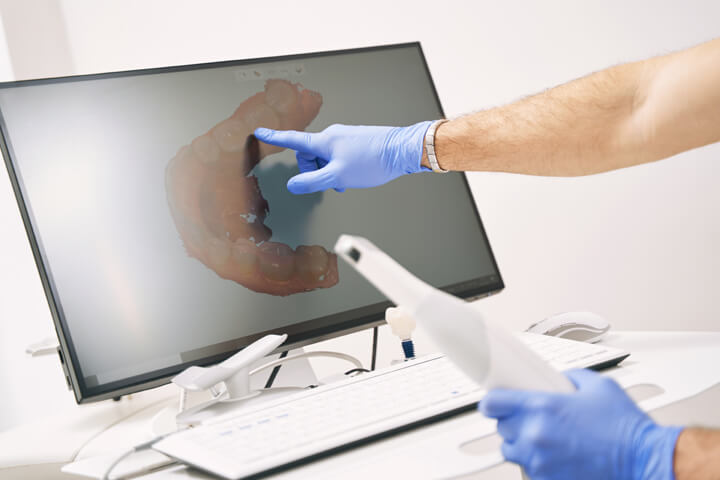
  • Intraoral scanner

    Intraoral scanner

  • Intraoral scanner

    Intraoral scanner

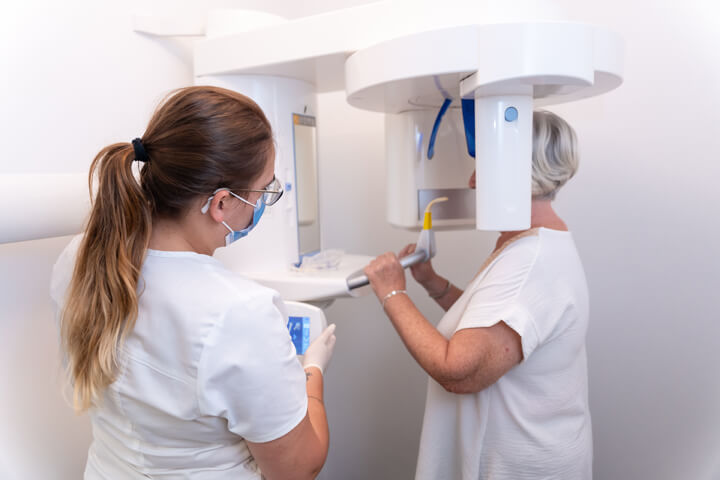
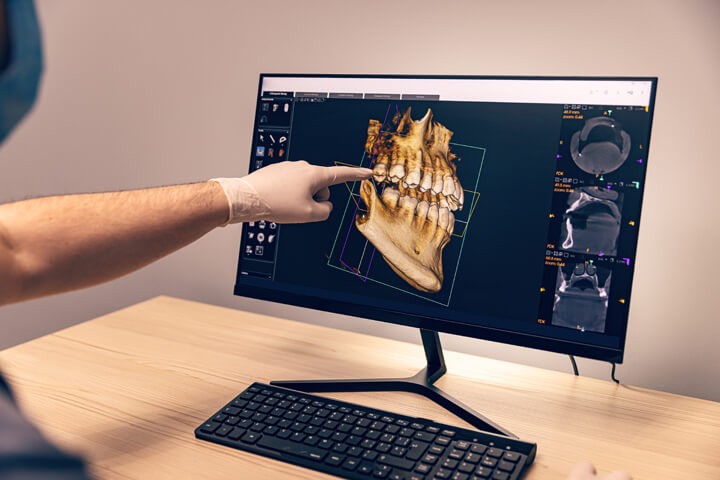
  • Three-dimensional computed tomography

    Three-dimensional computed tomography

  • Three-dimensional computed tomography

    Three-dimensional computed tomography

  • Digital planning systems

    Digital planning systems

  • Intraoral scanner

    Intraoral scanner

  • Three-dimensional computed tomography

    Three-dimensional computed tomography

  • Digital planning systems

    Digital planning systems

  • Digital planning systems

    Digital planning systems

  • Intraoral scanner

    Intraoral scanner

  • Intraoral scanner

    Intraoral scanner

  • Three-dimensional computed tomography

    Three-dimensional computed tomography

  • Three-dimensional computed tomography

    Three-dimensional computed tomography

  • Digital planning systems

    Digital planning systems

  • Intraoral scanner

    Intraoral scanner

  • Three-dimensional computed tomography

    Three-dimensional computed tomography

Modern 3D diagnostics and digital implant treatment planning

At Malo Clinic, dental implantology is supported by advanced digital technologies, such as intraoral scanners, three-dimensional computed tomography (CT/CBCT 3D), and modern digital treatment planning systems.

The use of digital solutions allows for a detailed analysis of the anatomical structures of the oral cavity and precise planning of the position of dental implants. Before starting the surgical procedure, a simulation of each stage of treatment is performed, enabling optimal placement of the implants in the bone and minimising the risk of complications.

The application of digital techniques translates into high predictability of the procedure, a reduction in surgical time, and the optimisation of the tissue healing process.

Smile Makeovers

The presented clinical cases show the effects of implantology procedures in patients with missing teeth. The medical documentation presents the course of treatment, the aim of which was the full restoration of chewing function and the natural aesthetics of the dentition.

The publication (presentation) of the above cases has been explicitly authorised by the patients, who have consented to their public release without reservation. The information provided is objectively true and is intended to help other patients make a free and informed choice.

The publication (presentation) of the above cases has been explicitly authorised by the patients, who have consented to their public release without reservation. The information provided is objectively true and is intended to help other patients make a free and informed choice.

What tooth loss does dental implantology restore?

Missing single tooth

Restoration of a single missing tooth using a dental implant, without involving the adjacent teeth.

Restoration of a single missing tooth using a dental implant, without involving the adjacent teeth.

Missing single tooth

Restoration of a single missing tooth using a dental implant, without involving the adjacent teeth.

Missing several teeth

Reconstruction of several missing teeth with fixed bridges based on dental implants.

Reconstruction of several missing teeth with fixed bridges based on dental implants.

Missing several teeth

Total toothlessness

Placement of a full fixed dental prosthesis. Full restoration of the upper and/or lower dental arch using fixed prostheses supported on just 4 implants.

Placement of a full fixed dental prosthesis. Full restoration of the upper and/or lower dental arch using fixed prostheses supported on just 4 implants.

Total toothlessness

Resorption (loss) of bone

The loss of natural teeth is associated with progressive bone loss. Reconstruction using dental implants plays a key role in stabilizing and preventing resorption of the alveolar bone.

The loss of natural teeth is associated with progressive bone loss. Reconstruction using dental implants plays a key role in stabilizing and preventing resorption of the alveolar bone.

Resorption (loss) of bone

Clinical team

A team of qualified doctors, ensuring safe, individually tailored care and the highest level of comfort throughout the entire treatment process.

Anna Grabowska, DDS

Anna Grabowska, DDS

Armando Lopes, DDS

Armando Lopes, DDS

  • Anna Grabowska, DDS

    Anna Grabowska, DDS

  • Armando Lopes, DDS

    Armando Lopes, DDS

  • Anna Grabowska, DDS

    Anna Grabowska, DDS

  • Armando Lopes, DDS

    Armando Lopes, DDS

Frequently asked questions

1

What are dental implants?

Dental implants are titanium components (implants) that are inserted into the jawbone or mandible to replace the roots of lost teeth. They serve as a foundation for attaching permanent prosthetic restorations, such as single crowns, bridges, or full dentures.

2

Who is eligible for dental implant treatment?

Ideal candidates for dental implant treatment are individuals in good general health with proper oral hygiene, healthy gums, and an adequate amount of bone to support the implant. However, in patients with conditions such as diabetes, osteoporosis, or other medical disorders, implant treatment is not absolutely contraindicated.

3

Is the dental implant placement procedure painful?

The implantation procedure is performed under local anaesthesia, which allows for complete pain control during the procedure. After the surgery, it is normal to experience some discomfort or swelling, which can be minimised with painkillers prescribed by your dentist.

4

How long does the dental implant process take?

The surgical procedure for implant placement itself is relatively quick and takes between 1 and 3 hours, depending on the complexity of the case. On the same day, a fixed (temporary) prosthesis is also attached. However, the entire process can be considered fully complete after 4–6 months, as this is the time required for osseointegration, which is the fusing of the implant with the bone.

5

What is osseointegration?

Osseointegration is a biological process in which a titanium implant fuses with the jawbone, creating a stable and durable foundation for the final fixed prosthesis. This process is crucial for ensuring the long-term success of implant treatment.

6

How should dental implants be cared for?

Dental implants require the same care as natural teeth. This includes daily brushing and flossing, or using other additional solutions recommended by your dentist or dental hygienist, such as subgingival irrigators. Maintaining proper oral hygiene and regular check-ups and hygiene appointments are essential to prevent infections and other complications around the implants.

7

What is the success rate of dental implants?

Dental implants are characterised by a high success rate, which is around 98%. However, long-term success depends on factors such as the patient's general health, bone quality, as well as adherence to the follow-up appointment protocol and proper oral hygiene.

8

Are there any risks or complications after implant placement?

Like any surgical procedure, dental implant placement carries some risks, including infection, nerve damage, or sinus problems. However, these risks are rare and can usually be managed through proper care and professional medical monitoring.

9

Is it possible to replace a traditional removable denture with implants?

Yes, many patients choose to replace traditional removable dentures with implant-supported partial or complete dentures for greater comfort, stability, and improved phonetic (speech) and chewing functions. An additional advantage of implants is that, unlike removable dentures, they do not cause trauma to tissues or adjacent teeth and prevent or stabilise bone loss.

Articles related to oral health

Book a consultation

Book a consultation

Fill in the form and we will contact you.

I consent to the processing of my data by MALO CLINIC for marketing purposes (campaigns, benefits, offers,...) via electronic mail (Email) and SMS messages.

Thank you, the form has been submitted

Book a consultation

Book a consultation

Fill in the form and we will contact you.

I consent to the processing of my data by MALO CLINIC for marketing purposes (campaigns, benefits, offers,...) via electronic mail (Email) and SMS messages.

Thank you, the form has been submitted

Book a consultation

Book a consultation

Fill in the form and we will contact you.

I consent to the processing of my data by MALO CLINIC for marketing purposes (campaigns, benefits, offers,...) via electronic mail (Email) and SMS messages.

Thank you, the form has been submitted

Malo Clinic Polska sp. z o.o. registered in the District Court for the Capital City of Warsaw, 13th Commercial Division of the National Court Register under KRS number: 0000242331, share capital PLN 300,000.00, NIP (Tax Identification Number) 525-234-17-37, REGON (National Business Registry Number) 140078686

SWIFT: BIGBPLPW | Bank Millennium SA | ul. S. Żaryna 2A, 02-593 Warszawa | Poland

MALO CLINIC WARSZAWA Bank account: PL 06 1160 2202 0000 0000 6313 6153

MALO CLINIC SZCZECIN Bank account: PL 36 1160 2202 0000 0007 2348 1155

Developed by